

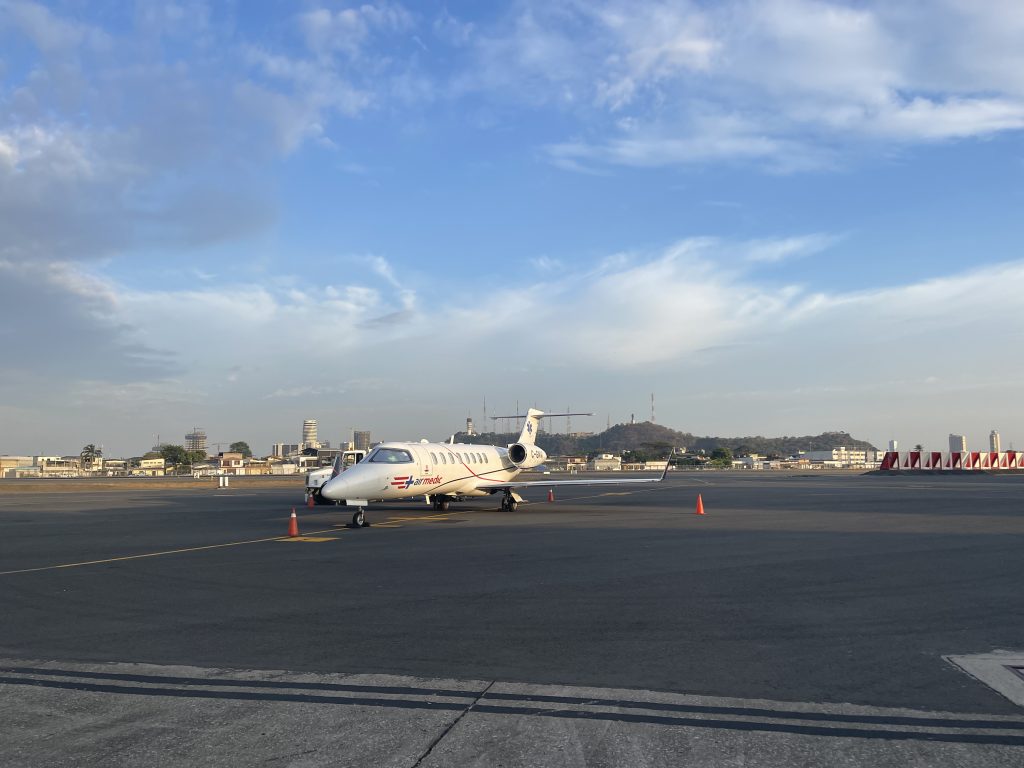
Case study of an international mission operated on a Learjet 45XR
Executive Summary
An intercontinental medical repatriation of two patients, from the Galápagos Islands to the United Kingdom complex long-range mission on the operational side. Clinically, it raised an even more demanding question. The team had to determine whether both patients could travel together safely, in a confined cabin. Yet their profiles were asymmetrical: one on a stretcher, the other carrying an unresolved neurological uncertainty.
This question was the central issue of the case. It had to be addressed before any operational considerations and was resolved through a strictly clinical decision-making process. First, the team evaluated the alternative of conducting two separate missions, an option that was clinically justifiable in its own right. However, it was ruled out following a comparative analysis rather than by default. In the end, a combined transport was approved only after a non-negotiable validation step had been completed: resolving, before departure, the clinical uncertainty affecting one of the two patients.
The following case study documents the clinical reasoning, the validation criteria and the operational protocol that resulted.
Mission Context
First, the first patient had sustained multiple fractures. Her condition required stretcher transport with continuous clinical monitoring. In addition, she required appropriate pain management throughout the flight. Furthermore, the aircraft’s pressurized cabin required ongoing monitoring for thromboembolic and neurovascular risks.
Next, the second patient, who had been discharged from the local hospital during the post-traumatic phase of recovery, remained independent and fit to travel in a seated position. However, in the days leading up to the mission, he experienced an episode of confusion while receiving anticoagulant therapy. As brain imaging equipment was unavailable locally, no investigation could rule out a possible neurological complication.
This intercontinental medical repatriation therefore involved three interdependent challenges:
- two patients with clinically asymmetrical medical needs
- pre-flight diagnostic uncertainty affecting one of the patients
- a remote geographical environment lacking the infrastructure required to resolve that uncertainty
Each of these challenges, considered individually, already justified a thorough assessment before departure. Consequently, taken together, they required that not only the decision to transport the patients, but also the manner in which the transport would be conducted, be treated as a clinical decision in its own right.
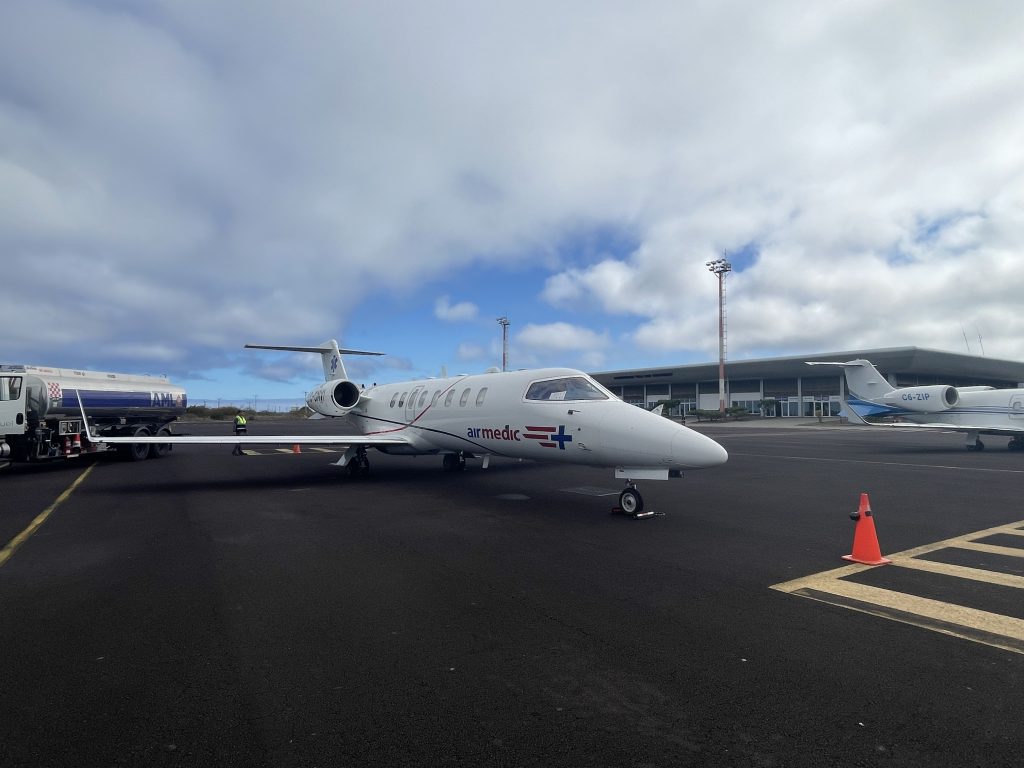
Combined Transport or Separate Missions: The Decision
Both options were clinically justifiable. Indeed, it was this apparent equivalence that made the decision particularly challenging.
Option A — Two Separate Missions
First, separate transport offered the greatest safety margin. Each patient would have benefited from the exclusive attention of the onboard medical team. In addition, any in-flight deterioration could have been managed without cabin space constraints or the need to prioritize one patient over the other. On the other hand, this option would have significantly delayed the repatriation of one of the patients. It also meant separating them during the post-traumatic phase of their recovery.
Option B — Combined Transport
Alternatively, combined transport addressed patient care in its broadest sense. It allowed both patients to return home, reunite with their loved ones, and continue their care within a healthcare system capable of providing ongoing treatment. Moreover, for patients recovering from traumatic injuries, travelling together to a familiar environment offered reassurance. However, this option required one non-negotiable prerequisite. Before departure, the medical team had to establish with clinical certainty that both patients could safely share the aircraft cabin without compromising the team’s ability to provide care during the flight.
Three Non-Negotiable Conditions
- Resolve the patient’s neurological uncertainty through objective imaging. An undiagnosed intracranial hemorrhage in a patient receiving anticoagulant therapy, travelling in a pressurized cabin on an intercontinental flight, represents a level of risk that no operational justification can outweigh.
- Confirm the female patient’s hemodynamic stability. Shared medical supervision had to remain safe throughout the entire flight.
- Structure the mission to allow for complete reassessment at every stopover should either patient’s clinical condition change.
Therefore, it was the assessment of these three clinical conditions, not operational feasibility, that formed the basis of the final decision.
Solutions deployed
For this intercontinental medical repatriation, Airmedic structured its response in three parts. First, confirming clinical feasibility. Second, overseeing the care of the two patients during the flight. Finally, coordinating multiple crews over a long distance.
Part 1 — Fit-to-fly Assessment
Before confirming the intercontinental medical repatriation, the team coordinated with the local physician to transfer the patient to Ecuador for a brain scan.
The flight physician took part in this pre-flight assessment. It allowed the team to establish a clear plan before departure: intervention priorities, decision thresholds in case of deterioration, resources available at each stopover. Thus, thorough preparation ensured a safe flight.
Part 2 — The Protocol for Managing Two Patients in Flight
Transporting two patients at once is a clinical decision in its own right. Indeed, in this case, it was based on a favorable assessment of both patients. First, the patient was hemodynamically stable. Next, the second patient, cleared to fly after his scan, remained autonomous and did not require constant active care.
The protocol rested on clinical prioritization and on the ability to reorganize at each stopover if the situation required it. The patient on the stretcher was the highest-risk case. She therefore received primary monitoring. Furthermore, at the slightest sign of deterioration, the protocol mandated an immediate halt and consultation with the medical team and the attending physician before continuing.
Ultimately, traveling together also had a positive impact on the psychological well-being of both patients. This comfort factor is a natural part of a person-centered approach to care.
Part 3 — Multi-Crew Coordination
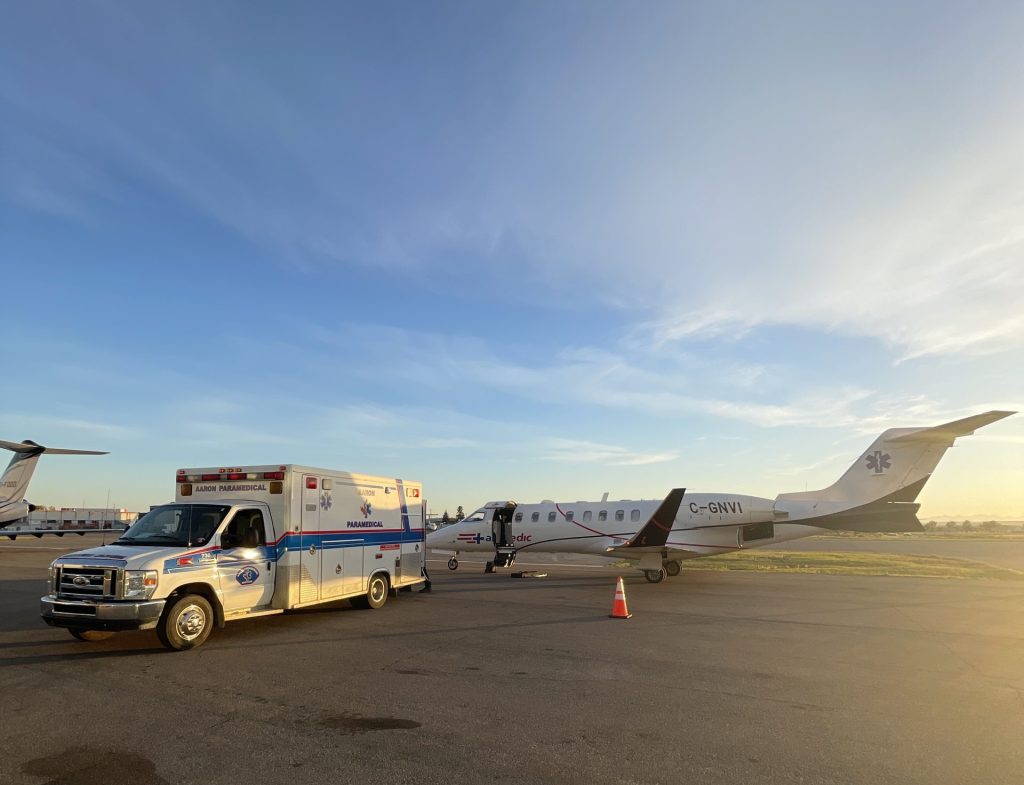
The distance and complexity of the mission mobilised three pilot crews and four medical team members. Crew changes were scheduled in Panama and Montreal, in compliance with regulatory limits on duty time.
Results and Impact
Ultimately,this intercontinental medical repatriation proceeded in accordance with the established objectives. Airmedic delivered the transport and care of both patients under optimal conditions, all the way to their final destination.
- Clinical safety confirmed prior to departure. Indeed, the brain scan performed in Ecuador ruled out the risk of neurological deterioration during the flight. It thus grounded the transport decision in objective medical data.
- Successful dual-patient care. Both patients travelled in conditions suited to their respective needs, with active monitoring maintained throughout the journey.
- Continuity of care ensured. Monitoring and clinical management were maintained without interruption, from the Galápagos Islands through the final transfer to the United Kingdom.
- Seamless multi-crew coordination. Three flight crews and four medical personnel ensured the mission’s operational and clinical continuity within regulatory frameworks.
Conclusion
Transporting two patients on the same flight is not a logistical decision; it is a clinical decision. Indeed, it follows a rigorous assessment of the risks, in-flight care capabilities, and the stability of each patient. In this case, a non-negotiable preliminary step made this decision possible. It was necessary to confirm, prior to departure, that both patients could withstand the stresses of an intercontinental flight.
Thus, it is in the most isolated environments and the most complex situations that thorough preparation makes all the difference.
Ultimately, the Galápagos–United Kingdom mission demonstrates four of Airmedic’s capabilities:
- Conduct a clinical assessment before taking action : incorporate a preliminary medical validation step when clinical uncertainty compromises transport safety.
- Manage dual-patient complexity : develop a clinical prioritization protocol tailored to the actual constraints of the cabin and the patients’ distinct profiles.
- Adapt the mission to the terrain : build the operational sequence around geographic and clinical constraints, rather than being subject to them.
- Coordinate multiple teams over long distances : maintain clinical and operational cohesion across several crews and hospitals.
Read also : Case Study of an International Bariatric Mission Operated on a Pilatus PC-12 NG


