Why is clinical assessment particularly challenging in the air medical environment?
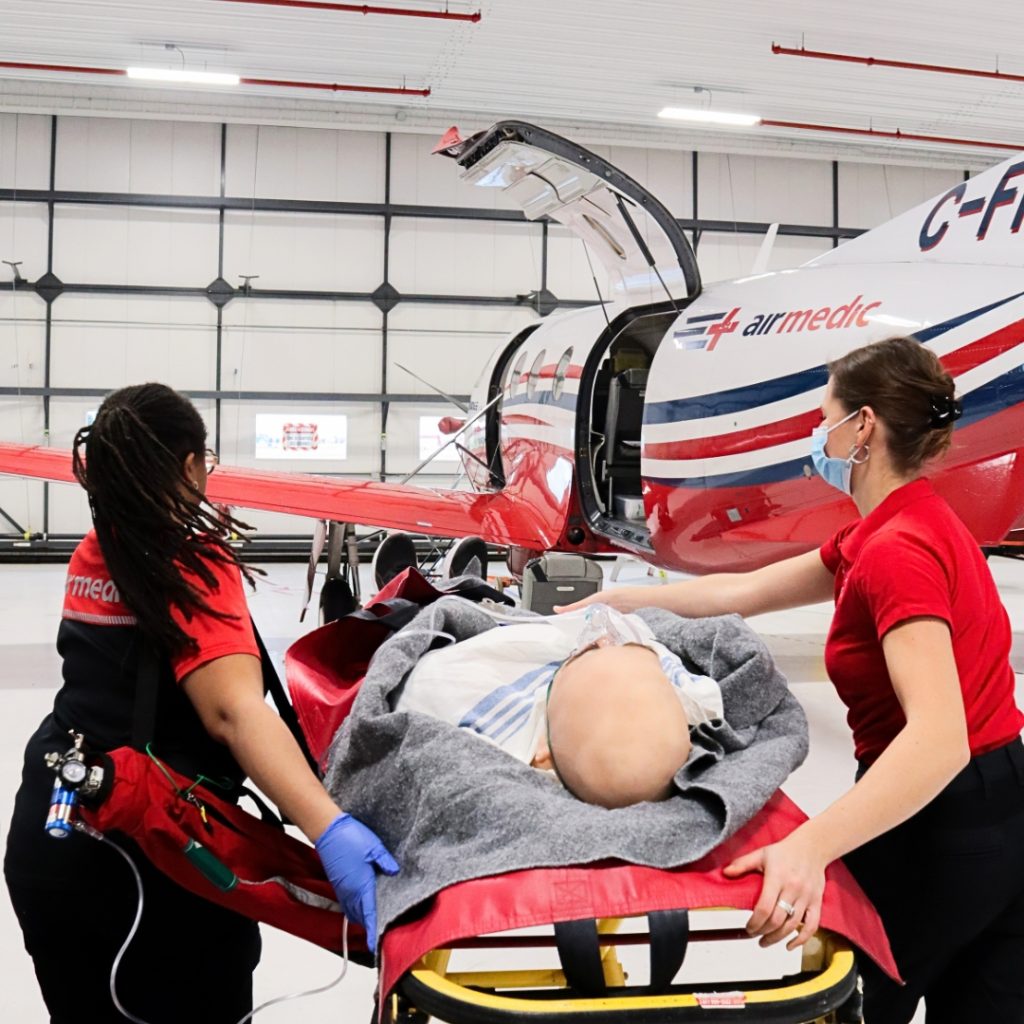
For decades, clinical assessment has relied on inspection, palpation and auscultation. These fundamentals remain essential. However, the aircraft environment introduces significant limitations. At altitude, engine noise can make auscultation impractical. In addition, vibration, confined space and the absence of a full diagnostic platform limit the information available to clinicians. Yet these are precisely the circumstances in which clinical decisions can carry the greatest consequences. At Airmedic, our objective is not to replace clinical judgement. Instead, we aim to provide flight clinicians with more objective information to support their decisions.
What technologies have you introduced to support this approach?
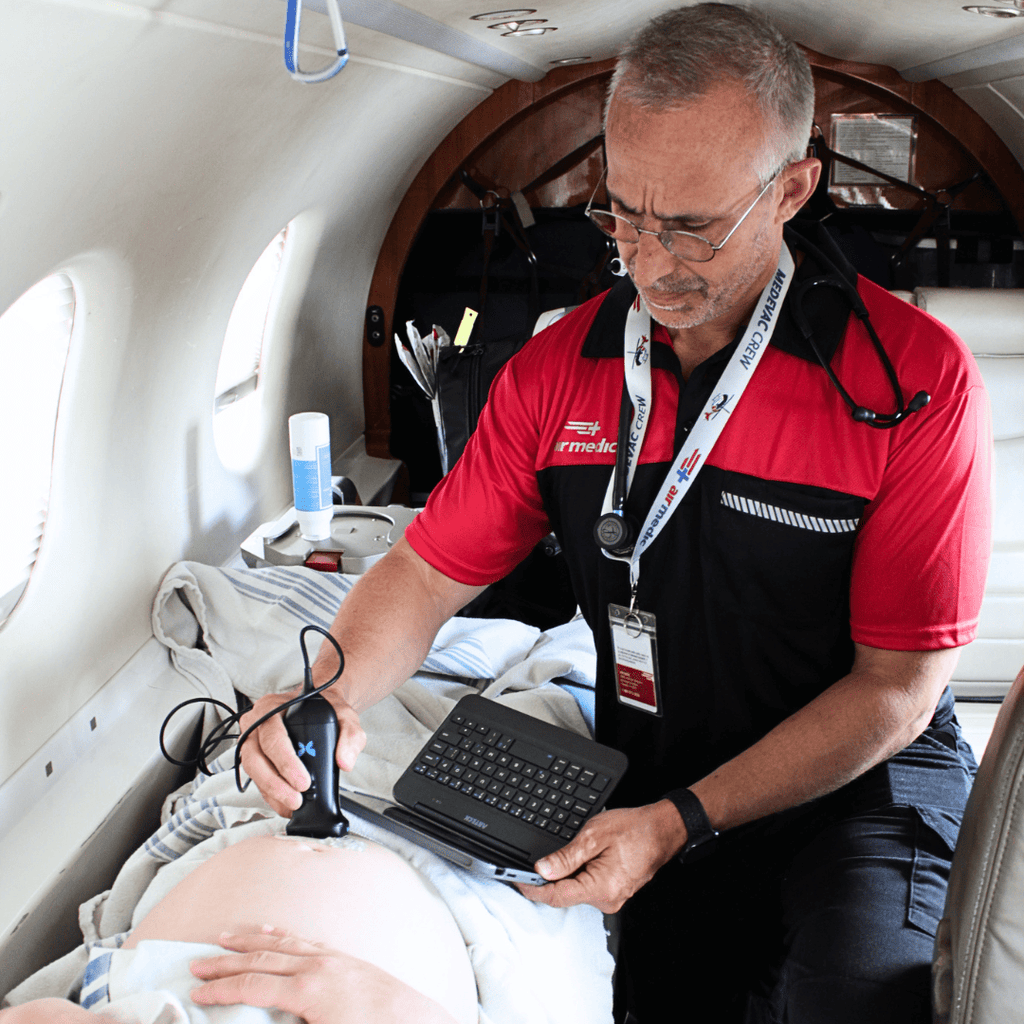
We have integrated two complementary tools into our aircraft: portable point-of-care ultrasound (POCUS) using the Butterfly system, and the i-STAT blood analyser. Together, these tools allow us to move beyond clinical impression alone. Specifically, ultrasound helps us visualise conditions that might otherwise be difficult to assess in flight. Meanwhile, point-of-care blood analysis provides rapid physiological and biochemical data.
How can POCUS support decision-making during air medical transport?
Its versatility is particularly valuable. For example, in a polytrauma patient, an eFAST examination can help identify intra-abdominal fluid, haemopericardium or pneumothorax. Detecting a pneumothorax before ascent is especially important. Indeed, gas expansion at altitude can turn a previously tolerated condition into a life-threatening emergency. Furthermore, lung ultrasound can help differentiate between interstitial oedema, consolidation and pleural effusion when auscultation is compromised. We can additionally assess the inferior vena cava and cardiac contractility to help guide fluid resuscitation. Finally, ultrasound improves procedural safety by supporting image-guided arterial or venous access in the challenging environment of a moving aircraft.
What additional information does the i-STAT provide?
With only a small blood sample, the analyser can provide results in under 10 minutes. These include blood gases, electrolytes, lactate, glucose, haemoglobin and renal function. Physical examination alone cannot provide these parameters. For example, elevated lactate levels can reveal occult hypoperfusion despite apparently normal blood pressure. Similarly, an abnormal potassium level or an acid-base imbalance can influence patient monitoring and management before or during flight.
What does this mean for patients and assistance partners?
The most significant change is the ability to anticipate rather than simply react. Accordingly, a more objective assessment before departure can help determine whether air medical transport is appropriate for the patient. It can also help establish the appropriate crew configuration and improve preparation for potential deterioration.
In addition, incorporating ultrasound and laboratory results into the transport record provides receiving teams a more current picture of the patient’s physiological status.
Is introducing the equipment enough?
No. Technology only has value when it is supported by clinical governance. That means structured training, clear protocols, quality control and integration of findings into the transport record. At Airmedic, we have approached implementation as a clinical programme. The required competencies must be acquired, maintained and assessed. Ultimately, the future of transport medicine will not be defined solely by the tools operators carry. Rather, it will depend on how rigorously they integrate these tools into safe, coherent clinical practice.