

In critical situations, pressure builds up quickly, and emergency measures can easily be forgotten. Testing your emergency measures with your employees through a tabletop simulation enables you to assess your team’s level of knowledge and reflexes. This type of exercise is essential if your employees are to gain confidence and be ready for any emergency situation.
Whatever the industry, learning by doing is the most concrete and effective way to train an employee, and that’s why Airmedic supports you in developing a tabletop and real-life simulation.
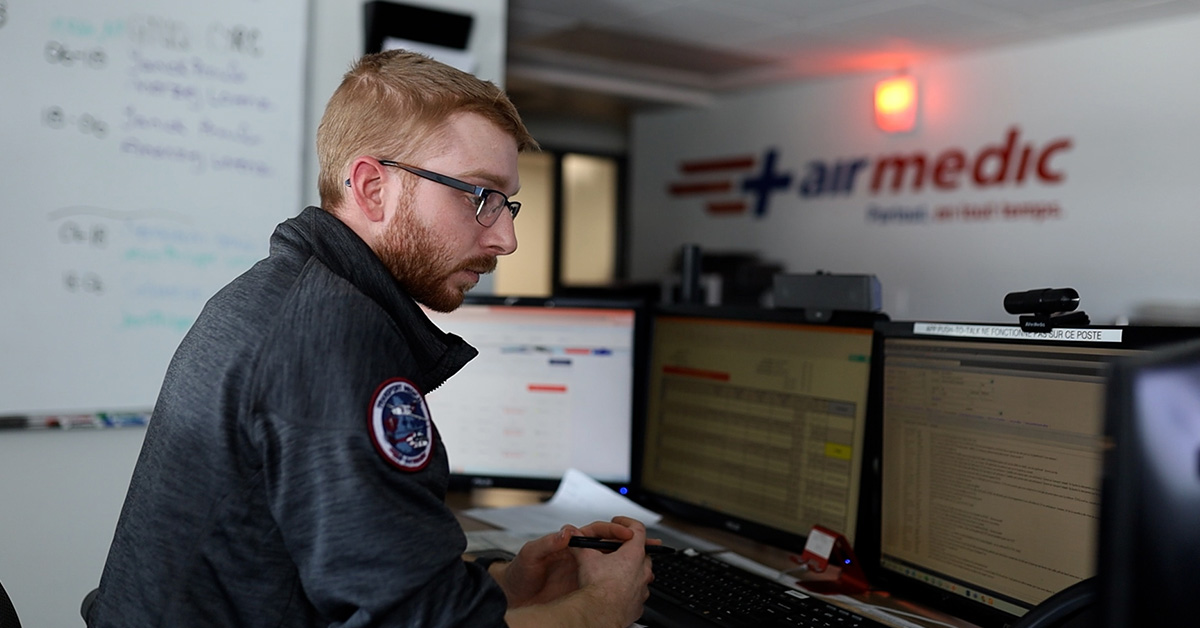
Why test your emergency response plan?
As an accident-prone or isolated company, you’re aware of the hazards in your industry, and you put in place all the measures necessary to deal with or avoid an emergency situation. Your emergency measures plan forms the basis of your operations.
However, despite all the precautions and training, when a dramatic situation occurs, executing the plan, communicating between the various parties and applying the correct procedures can become complex for your team.
Testing your emergency response plan allows you to :
- Verify your team’s knowledge;
- Practice reflexes and decision-making;
- Challenge existing practices;
- Validate information with your emergency and transport services;
- Prevent situations, fatalities and injuries.
“When I first had to collaborate with Airmedic on a complex wildfire evacuation of an injured person, even though I knew the procedure, I felt quite stressed. Afterwards, my work team thought it would be a good idea to organize a tabletop simulation with Airmedic to allow as many managers as possible to practice. It may seem trivial, but this really helped improve our reflexes, no matter the situation. Our managers felt much more confident and better equipped!”
– Valérie Dugas, prevention specialist
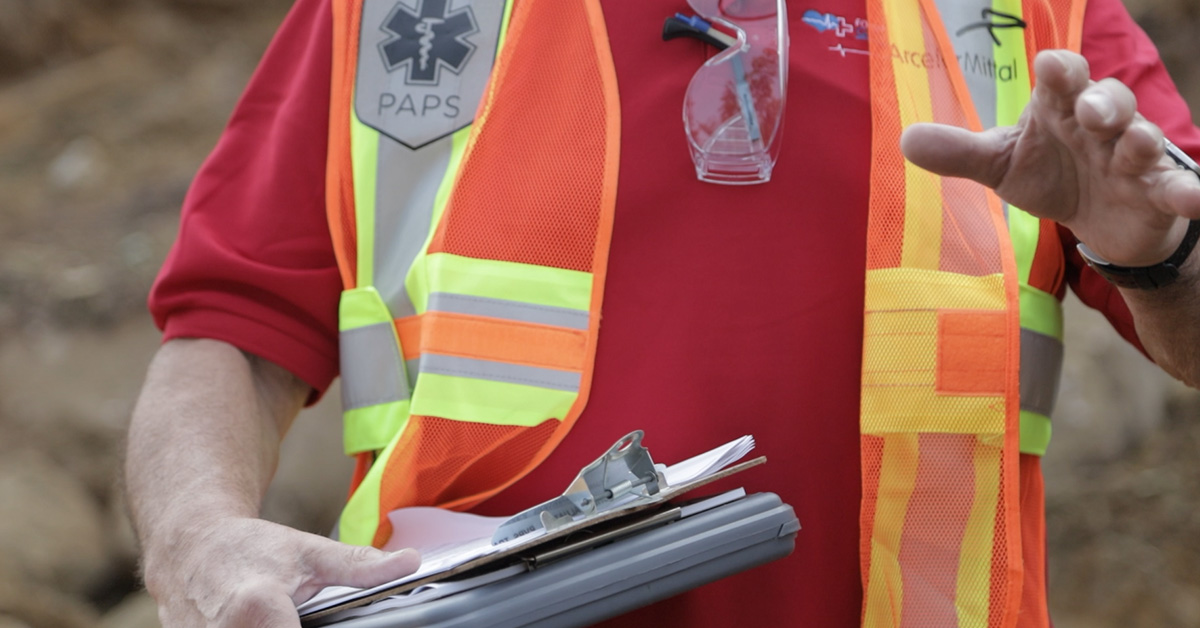
Test your emergency plan
Airmedic offers its members the opportunity to test their emergency response plan free of charge using tabletop simulations. These simulations are designed to meet specific objectives, with the aim of evaluating the emergency response plan.
The steps of a tabletop simulation for the emergency plan:
- Analysis of industry objectives and needs;
- Support in developing the simulation scenario;
- Determination of the optimal timing for the simulation;
- Real call handling by our coordination center;
- Debriefing with the teams that participated in the simulation.
Objectives of a tabletop simulation
Your objectives are simple: reduce response time and streamline the process during an emergency situation. However, certain elements will be important to highlight before your tabletop simulation. If you believe that an element is not well known by employees, it will be important to mention it to emphasize that point and guide the simulation accordingly.
These objectives will also specify which members of your team will participate in the simulation, the case to be chosen, and the intervention expectations.
Here are some elements to consider:
- Depending on the situation, the roles and responsibilities of the responder;
- Knowledge of the emergency plan;
- Identification of locations for air evacuation;
- Coordination of the intervention and evacuation if needed;
- Speed in contacting the Airmedic coordination center;
- Accuracy of the information shared with the Airmedic coordination center.
Simulation exercises prove to be extremely valuable for you and your team. Following an exercise, reviewing and analyzing what worked well and what didn’t will allow you to adjust your measures and streamline future interventions.
Test your emergency measures now with a tabletop simulation or a live simulation!


