


Discover the profession of a flight respiratory therapist
The profession of a flight respiratory therapist at Airmedic is unique. In fact, it combines technical skills with human interventions. You will intervene in complex situations, directly in the field. As part of this position, you will be responsible for patient care and stabilization in close collaboration with the flight nurse and the on-call physician. In addition, it includes patient follow-up with the physician, assessment of their health condition, administration of necessary care according to their state, as well as the application of established protocols.
Each case that respiratory therapists are called to work on is a unique experience with its own specific characteristics. This profession therefore requires you to be resourceful and to demonstrate a strong ability to adapt depending on the missions you will carry out.
As Tanya Thibeault, flight respiratory therapist at Airmedic, says: “There is something to learn every day, that’s the beauty of it! You have to love adventure and know how to handle the unexpected, and above all… love your profession passionately and know how to keep smiling. That is my most valuable advice.”
Learn more about Tanya Thibeault and the profession of flight respiratory therapist.
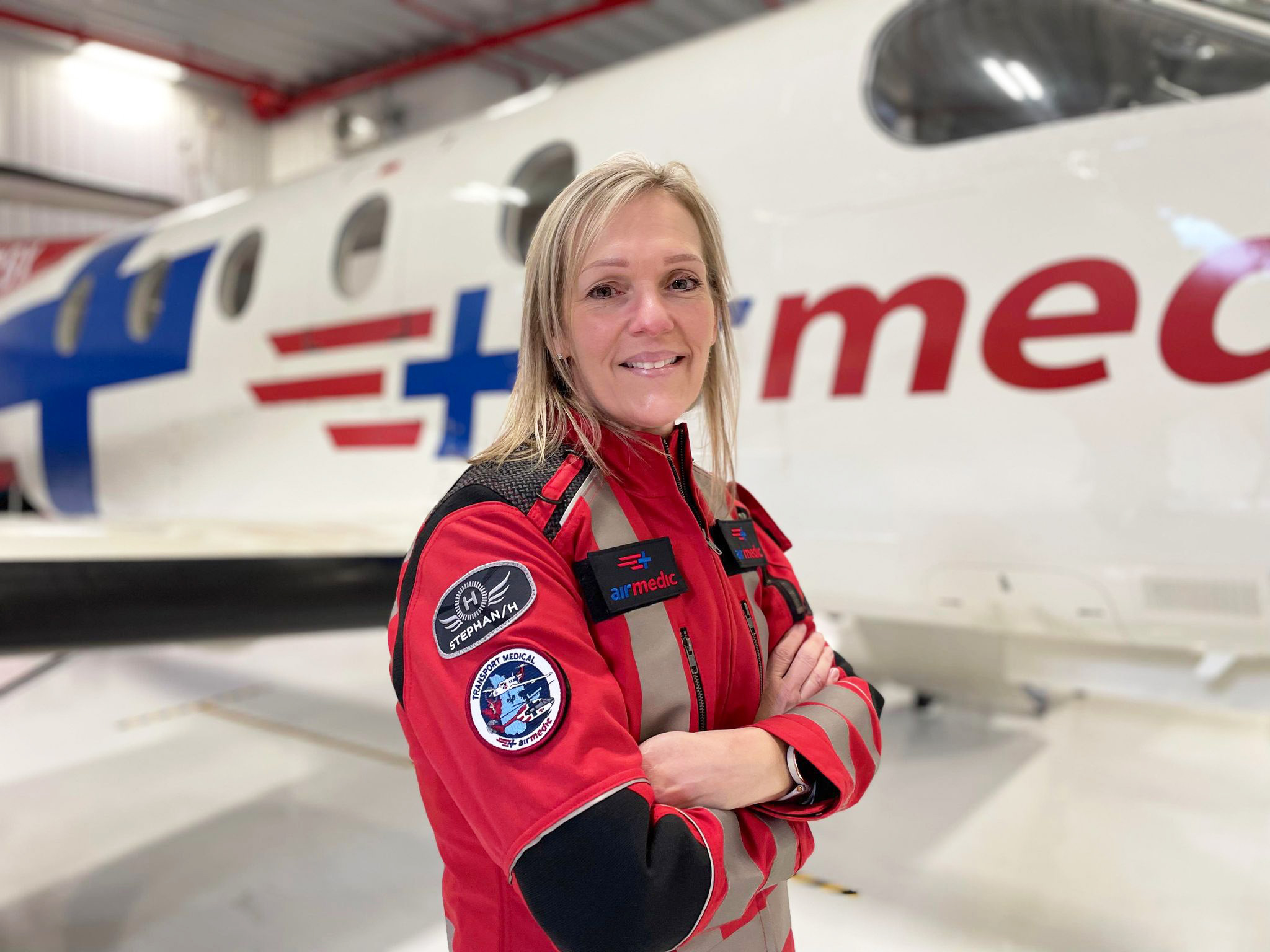
What drew you to Airmedic?
The combination of the aviation field and the medical field. Both sectors require precision, planning, and constant skills. I wanted to explore this environment and take part in it as a healthcare professional.
What does a typical workday of a flight respiratory therapist look like?
A typical day includes a mission, whether it is for a pre-hospital emergency call or an inter-hospital transfer.
-
- Often, I start my day on board an aircraft. The choice of aircraft varies depending on the type of mission. Most of the time, we carry out inter-hospital transfers.
- Once I arrive on site, I introduce myself to the local community care team and assist them according to their needs.
- As a team with a nurse, I take part in stabilizing the case to be evacuated. This includes setting up the vital signs monitor, performing a cardiorespiratory assessment, as well as planning the respiratory equipment needed during transport. Depending on the respiratory condition, we use devices ranging from simple oxygen therapy to a transport ventilator.
- When the patient is stabilized, we place them on the aircraft stretcher.
- I then take part in boarding the injured person and ensure patient monitoring throughout the entire flight as well as during all transfer stages to the hospital center appropriate to the patient’s condition, in order to be able to react quickly if their condition were to deteriorate.
- Once the mission is completed, it’s back home.
What, in your opinion, is little known about your job?
My role as a respiratory therapist is often associated only with the respiratory aspect. However, my clinical role is much broader when it comes to various care techniques. My experience in anesthesia allows me to effectively assist my colleagues, whether in flight or on the ground. I insert intravenous lines, perform analyses using portable devices, and intervene in resuscitation, whether adult, pediatric, or neonatal. I am also trained in the use of infusion pumps and the administration of blood products.
What is the greatest advantage of this job for you?
I discover unique ways of life by working with Indigenous communities in Quebec. I also travel through the Far North, admire spectacular landscapes, and learn to provide care in conditions very different from those in a hospital setting.

What is the most difficult part of your job?
This profession leads us to face sometimes very dramatic situations, and we must support people with very serious health conditions that can even lead to death. For this reason, I make sure to keep my skills up to date. This gives me the certainty that I have provided the best possible care.
What do you like the most about your job?
The fact that I feel useful. Indeed, each mission allows me to put my skills at the service of remote populations. That is why I find this work deeply rewarding.
What motivates you to work as a flight respiratory therapist?
I work in a rapidly growing company with innovative projects. Moreover, I meet passionate and dedicated people every day. It is in this stimulating environment that I want to continue to grow.
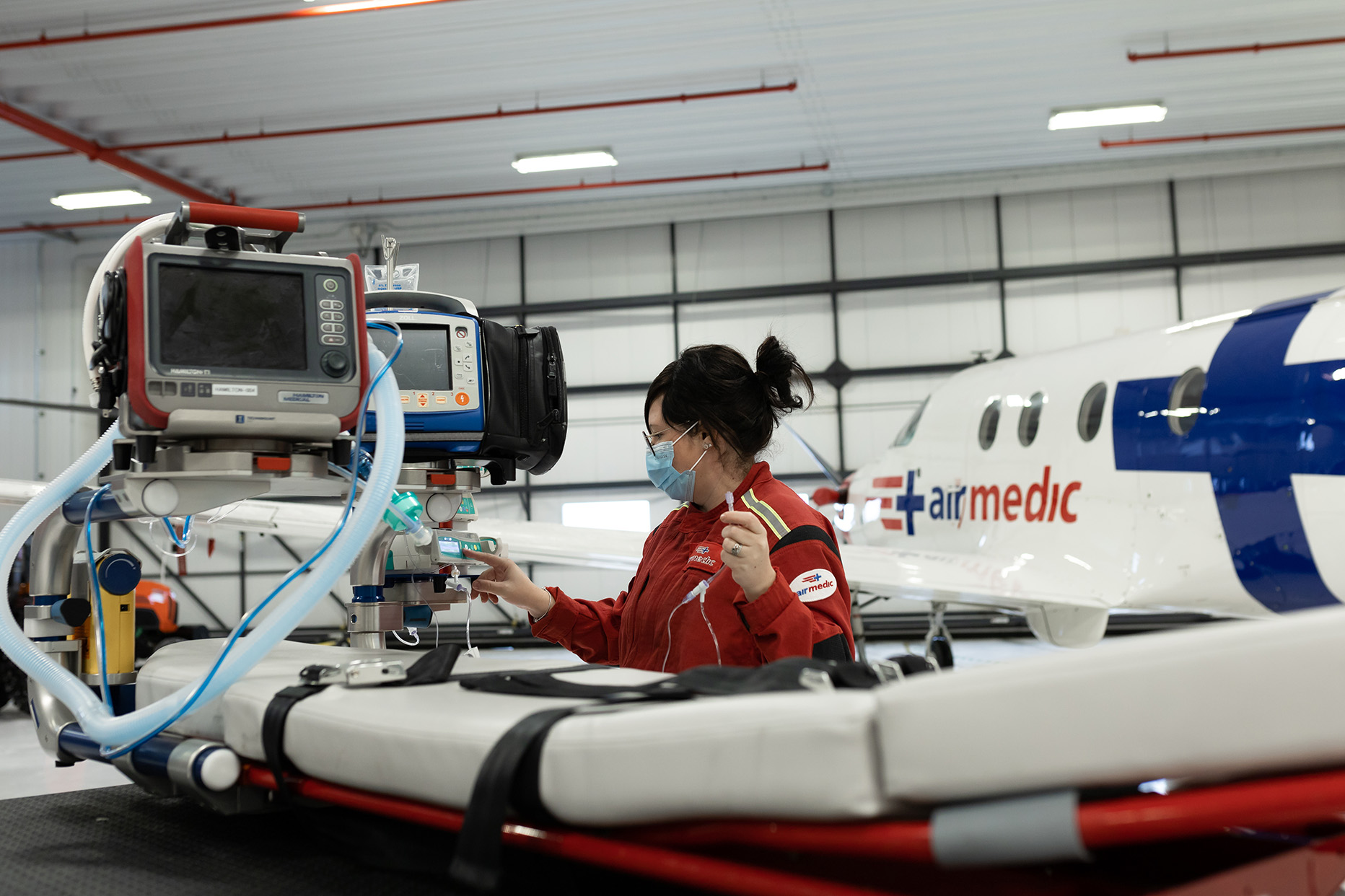
Join our team of heroes.
Do you thrive on adrenaline, and is your patients’ health important to you? With your medical expertise, you will allow our members to breathe calmly again. All that’s left is to put on your uniform!
We are continually looking for candidates to contribute to the growth of our company and to join us in committing to preserve and save lives.
For unsolicited applications, please contact us: [email protected]


