Airmedic is recognized for its expertise in air medical transport in Quebec. In regional settings, particularly in remote and isolated areas, its operations rely on the rapid deployment of highly qualified medical teams aboard medically equipped aircraft specifically adapted for this type of mission. Since 2012, more than 6,000 missions have been carried out, resulting in the transport of over 10,000 patients.
The deployment of Airmedic in rural areas, the ally of remote territories
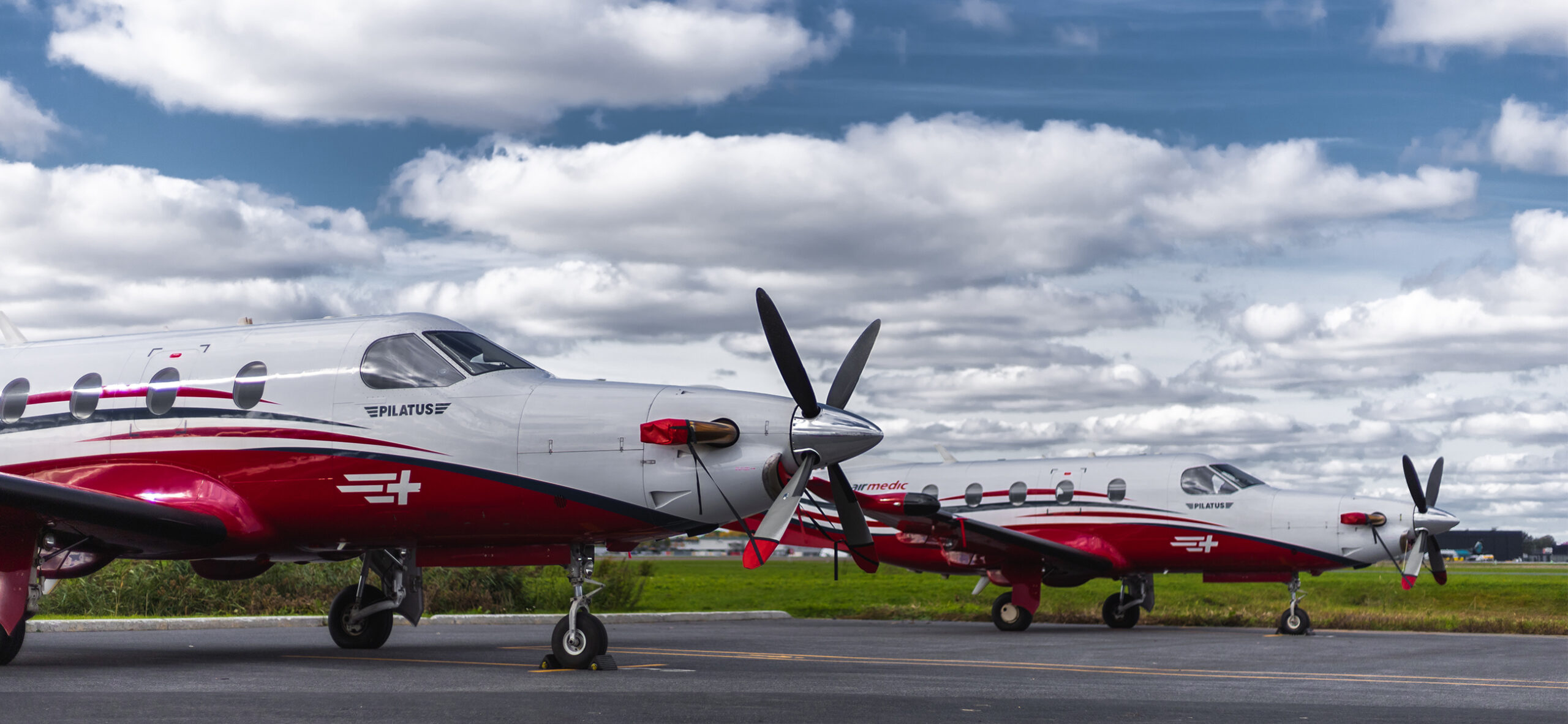
Airmedic’s aircraft, such as the Pilatus PC12 and PC24, play a central role in Airmedic’s deployment in rural areas. Thanks to their range, they enable faster interventions over long distances.
These Pilatus aircraft are excellent for Airmedic’s line of work. Able to take off and land on very short runways, they serve the most remote and isolated regions. Unpaved runways do not stop them. Their cargo door allows teams to comfortably board patients. Indeed, the onboard medical configuration enhances the quality of care provided during flight.
Thus, whether for corporate missions, interfacility transfers, or services to Indigenous communities, Airmedic adapts to the needs of the territory. Its aircraft efficiently cover vast distances while offering a fully medicalized environment that meets the highest standards of safety and quality.
Airmedic deployment: the western shuttle
Although many companies are covered by Airmedic protection, employees living in the area also need air transport services to ensure their safety and health. For this reason, the western shuttle serves Jamésie and Baie-James. This government-provided service allows residents of isolated regions to attend medical appointments and return home once treatments are completed.
Health centers in remote regions usually provide primary care. However, some treatments require a transfer to better-equipped urban centers. In this regard, Airmedic teams regularly travel to the hospitals in Val-d’Or, Sept-Îles, and Chicoutimi.
It’s often overlooked, but every day, an Airmedic plane makes this trip to meet the needs of the population.
The indigenous communities
Since Airmedic’s beginnings, Indigenous communities have been our allies. More than 65% of our operations involve this clientele, particularly the Innu, Cree, Naskapi, Atikamekw, and Inuit Nations. In some cases, we have built hangars or housing for our teams directly in the communities.
We are proud to contribute to reconciliation with First Nations. Indeed, we strive not only to serve the communities but also to better understand their realities, challenges, and culture. Our partnership enriches our knowledge and allows us to provide culturally safe transportation.
Thanks to its fleet of medically equipped aircraft, Airmedic is able to operate throughout Quebec and ensure equitable access to healthcare, regardless of location.